
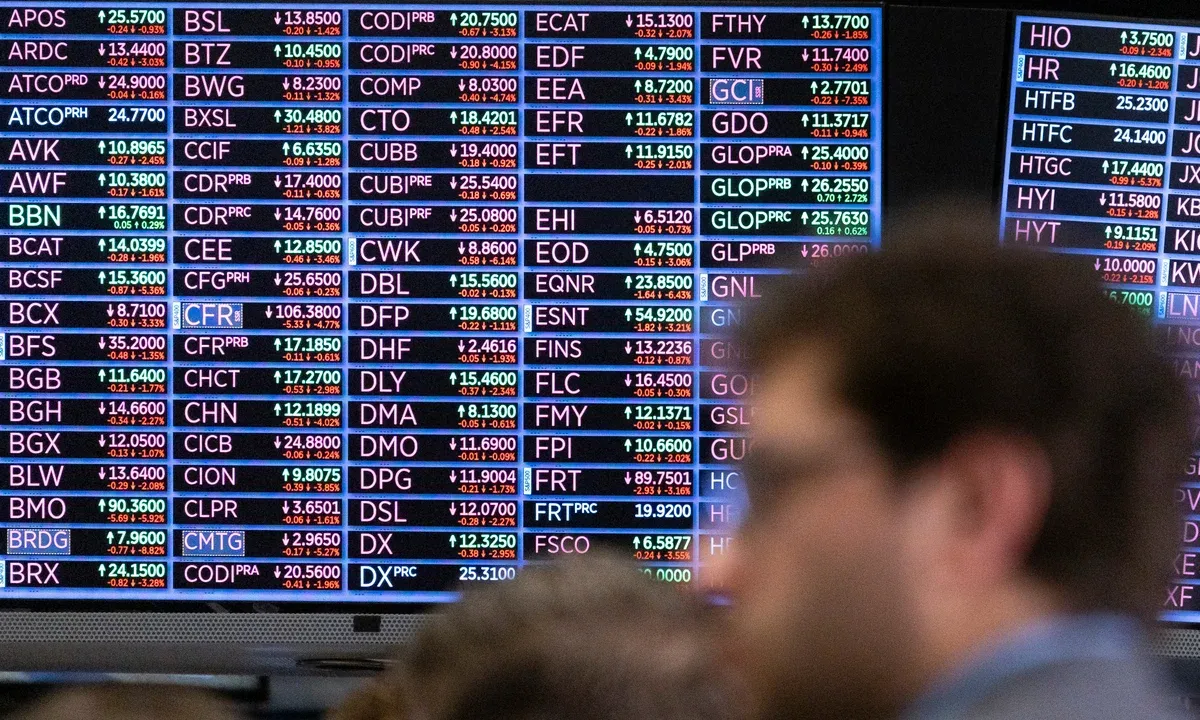
Bitcoin traded at $67,090, up 1.19% in the last 24 hours, while U.S. equities edged a little higher after the Supreme Court struck down President Donald Trump’s sweeping tariffs. The Dow Jones Industrial Average rose 170 points, recovering from earlier losses.
The S&P 500 gained 0.4% as of writing, and the Nasdaq Composite added 0.8%.
Despite the legal shockwave, markets avoided sharp swings. Why the calm reaction?
Court Rejects Emergency Tariff Authority
In a 6-3 decision, the Supreme Court of the United States ruled that Trump’s use of the International Emergency Economic Powers Act did not authorize him to impose broad tariffs. The 1977 law allows a president to regulate imports during national emergencies. However, Chief Justice John Roberts wrote that the statute does not grant power to levy tariffs.
“We claim only the limited role assigned to us,” Roberts stated, emphasizing constitutional boundaries. The majority concluded that Congress did not explicitly delegate tariff authority through IEEPA.
The decision invalidates tariffs that targeted nearly every country. Trump cited emergencies ranging from fentanyl trafficking to trade deficits to justify the measures. Lower courts had allowed the levies to remain in place until the Supreme Court resolved the case.
Dissent Highlights Legal Divide
Three conservative justices dissented. Justice Brett Kavanaugh argued that tariffs fall within traditional tools used to regulate imports. He wrote that statutory text and precedent support that interpretation. Justices Clarence Thomas and Samuel Alito joined his dissent.
The ruling marks a rare setback for Trump before the conservative-majority court. Two justices nominated by Trump sided with the majority. The opinion represents the first final Supreme Court judgment on the legality of one of Trump’s core economic policies.
Market Reaction Remains Muted
Investors showed restraint following the announcement. The Dow recovered from a 200-point intraday drop tied to weak economic data. Meanwhile, equities stabilized as traders weighed the broader implications. The limited reaction suggests markets had already priced in legal uncertainty.
Bitcoin also posted modest gains rather than a breakout move. Traders appeared focused on macroeconomic trends and interest rate expectations rather than tariff policy shifts. Some analysts note that tariff uncertainty had lingered for months, reducing the shock factor.
Sector-specific tariffs on steel, aluminum, and copper remain in effect because they rely on separate legal authority. As a result, trade policy did not change overnight in its entirety.
Refund Questions And Next Steps
The decision opens a clear path for companies to seek refunds on billions of dollars in previously paid tariffs. Firms including Costco, Toyota Group and Revlon have pursued legal action to preserve their claims. However, the Supreme Court did not outline a refund process. Lower courts will now address those disputes.
Looking back, Trump once said that he still had a plan B if the court struck down the tariffs. This Plan B is yet to be unleashed. Currently, up to $133B is to be refunded.

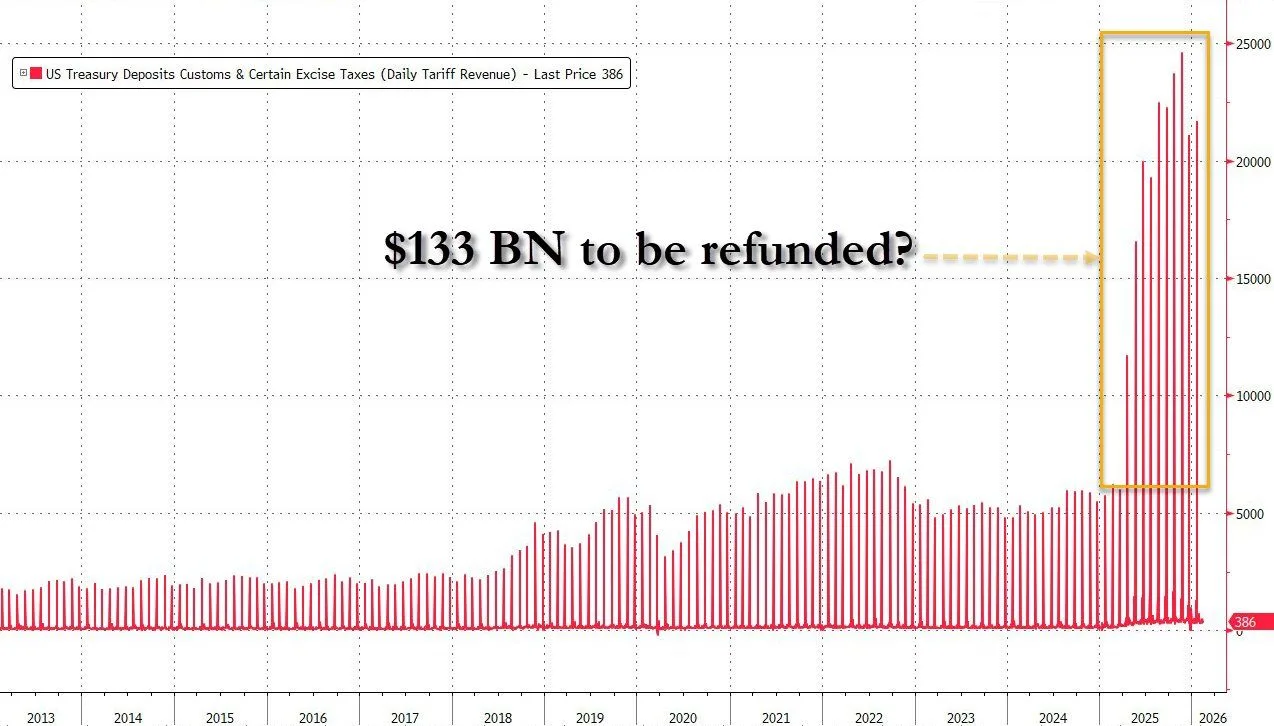
Source: ZeroHedge via X
Trump retains options to pursue tariffs under alternative statutes or seek congressional approval. Congress holds constitutional authority over taxation and trade policy. The administration may attempt to justify new measures under different legal frameworks.
For now, financial markets signal caution rather than celebration or panic. The ruling reshapes executive trade authority, yet investors continue to focus on growth data, inflation and monetary policy. Legal drama rarely drives sustained rallies on its own.
News#Heres #Crypto #amp #Stocks #Stayed #Calm #Supreme #Court #Strikes #Trump #Tariffs1771608466
